
Published:
October 17, 2025
Author:
Darren Clifford

If you want to invest successfully in the climate transition, you have to start with intellectual honesty. I often open conversations with a simple question: If I gave you $100 million, would you bet that global warming stays below 2.5°C, or that we exceed it?
Most people hesitate before admitting the obvious: the world is on a 2.5°C-plus trajectory.
The question isn’t whether that’s what we want, it’s what we realistically believe will happen. And once you accept that, the entire investment logic changes.
Below are three common assumptions holding climate investors back, and why I believe (and BloombergNEF has agreed adaptation will define the next decade of opportunity.

Net zero is important, but it has become a distraction. The obsession with a single metric risks creating myopic decisions: chasing carbon accounting milestones instead of improving human quality of life.
We don’t live in a spreadsheet. People need reliable power, safe housing, food security, and health systems that function in a hotter, more volatile world. Sometimes that means trade-offs. Air conditioning, for example, increases emissions, yet without it, elderly and vulnerable populations may die in heatwaves.
A more realistic metric is quality of life, with net zero as one of several inputs.

You often hear the hopeful idea that we can overshoot climate targets and then “pull temperatures back down” through negative emissions or carbon capture. I don’t buy it.
Imagine a world in 2040 where populations have already migrated, supply chains have shifted north, and infrastructure has been rebuilt for new weather patterns. Who writes the check to reverse that?
Even if, being incredibly optimistic, we steeply reduce emissions and the world gets en route to ‘recovery,’ it will take decades for systems to readjust.
The probability of large-scale, fast overshoot recovery is close to zero. The incentives won’t line up, and human behavior won’t change that quickly.
The ability of goods and services to stand new climate conditions is just one part of it. To us, adaptation is how people will respond to a changing climate out of their own self interest.
We use a simple taxonomy to make sense of it:
When investors see adaptation only as resilience, they miss the market forces that will reshape entire industries.
At Adapt [us], we invest in and build companies that profitably fulfill demand in a 2.5°C+ world while improving our quality of life.
Climate change is reshaping what people buy and how businesses operate. Demand will rise for cooling, safe water, health protection, resilient food systems, and climate-ready infrastructure. These are not distant projections, they are near-term markets.
Here are three examples of companies we think will be in demand more as the climate crisis continues:
But adaptation’s biggest challenge isn’t just innovation. It’s scale. We already have many of the technologies and solutions we need. What’s missing is the ability to identify which ones work best and help them grow fast enough to matter. That’s why Adapt [us] combines venture investment with a venture builder model, giving founders hands-on support in go-to-market, finance, and operations so effective solutions can reach the people who need them most.
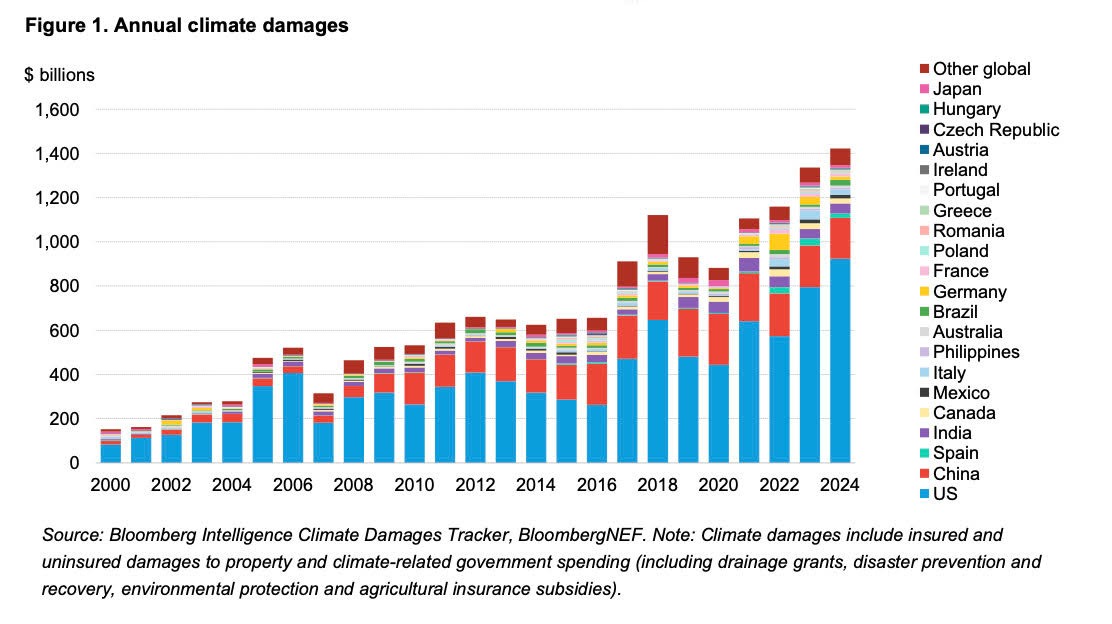
A recent report from S&P Global was blunt: there’s a 90% chance the world surpasses 1.5°C by 2040 and a 50% chance of hitting 2.3°C. Yet investment in adaptation represents 5% of investment in mitigation. Within adaptation investing, only 11% of it is private capital. This is a massively under funded space.
We see that gap as an opening. As more investors accept that adaptation is inevitable, the question will shift from ‘if’ to ‘how fast’ we can find and scale the solutions that help humanity live well in a warmer world. Adaptation is not a hedge; it’s the next economy.
Darren Clifford is the Founder and Managing Director of Adapt [us] Capital. With 15 years scaling businesses as a founder, investor, and venture builder—including a decade at McKinsey’s Green Business Building practice—he backs companies designed to thrive in a 2.5°C+ world.