
Published:
October 13, 2025
Author:
Dominic Go
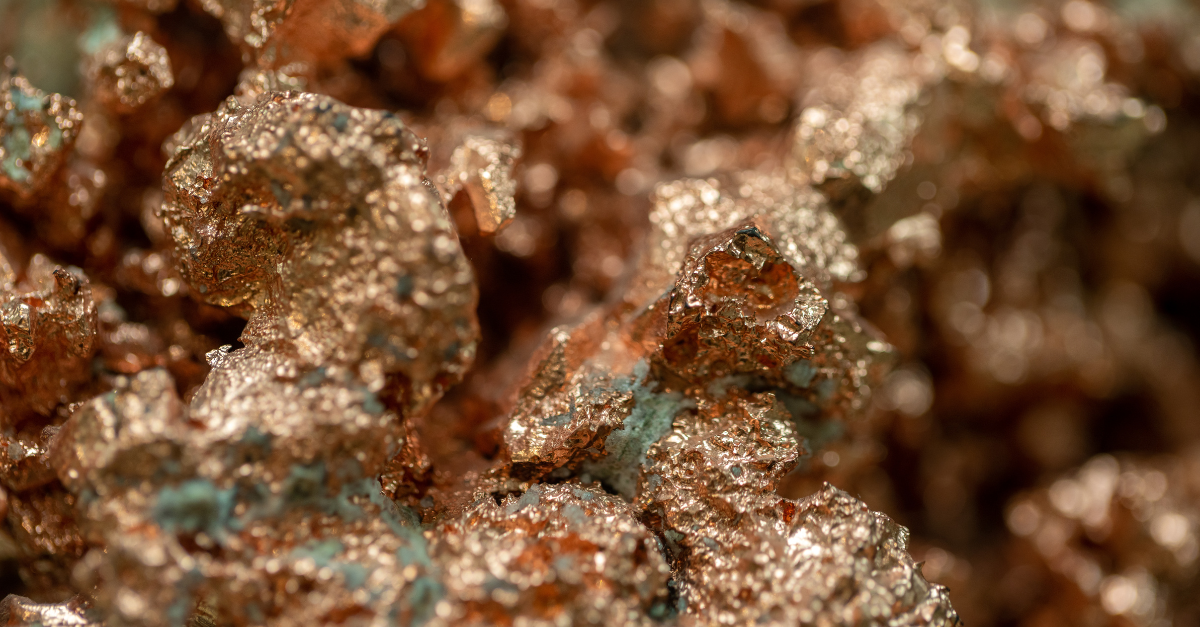
In August of 2025, the USGS released its draft critical minerals list which included 54 mineral commodities. Some are likely to sound familiar, like nickel or lithium, while others, like neodymium or rhodium, may be just a faint memory from tenth grade chemistry. To the lay person, it may not be obvious why these specific elements are labeled “critical”. Broad sentiments like “securing our supply chains” and playing a “crucial role in manufacturing and technology” are certainly valid, but they do not quite capture the breadth of this problem nor the potential consequences of failing to meet the demand.
At Nomadic Venture Partners, we know that the problem of securing critical minerals is not merely about preventing a foreign adversary from gaining a marginal advantage nor is it only about price stability in the marketplace. The problem is much more fundamental and far reaching. It is apolitical with a complicated web of stakeholders and interests over a decades-long timescale. In the end, it has the potential to touch everyone’s way of life, and when we say “everyone”, we mean this on a global scale. And while the scope of the problem is massive, this also means that there is massive opportunity.
54 minerals is a lot. Their extraction processes, geopolitical impacts and use cases vary widely. And so to illustrate this perspective, we will deep dive into a single element: Copper (Cu).
Copper is the metal that quietly powers modern life. It’s the backbone of electrification, carrying current through our homes, vehicles, and digital infrastructure. As global demand for energy, mobility, and connectivity rises, copper has become both an economic and strategic necessity.
We need a lot of copper, and we are going to need more. BHP projects a 70% increase in the demand for copper by 2050 driven by global movements in the energy transition and the AI boom combined with natural economic growth.
So where does it all come from? Copper mines are found all over the world, but as with any mineral, the distribution is not equal. The leading producer is Chile with over 23% followed distantly by Democratic Republic of Congo with 11% of the world’s production. Peru, China and Indonesia round out the top five. The mere location of the deposits already presents significant geopolitical complexities, but then we must also consider the refining/smelting processes. 53% of global copper smelting takes place in China. This is an extremely energy intensive process that has a number of additional negative externalities including acid rain which is largely why China has been left to take over the market. However, this causes extreme supply chain risk.
Beyond just its location, copper ore grades have significantly deteriorated over the last century, and especially in the last three decades. Currently, average copper ore grades at operating mines are often below 0.7%, compared to historical averages of 1-2% in the 1990s, and some large mines now operate with grades as low as 0.65%. Escondida, the largest copper mine in the world based in Chile, “has seen grades decline from approximately 1.7% in the 1990s to below 0.8% in 2024.” To put this in perspective, Escondida produces ~900 thousand tonnes of copper per year. This implies that the mine has to drill, blast and mill 112.5 million tons of rock in order to meet that production mark. The scale is almost unimaginable. The energy consumption is astronomical. And yet, to meet the forecasted demand by 2050, we will need to build an Escondida-sized mine every year.
So, here we are at the intersection of a massive increase in demand and an unavoidably complex supply chain that’s simply not ready. As you might expect, each of the 54 critical minerals listed have their own demand curves and their own idiosyncratic supply chains. The challenge is enormous, and that’s why Nomadic Venture Partners is excited about the opportunity to invest in this space. From exploration to blasting to refining and everywhere else in the mining value chain, there is opportunity to have massive impact because every innovation is amplified by the scale of these operations. We’ve invested in Endolith to increase yields of existing resources significantly through clean bioleaching. We’ve invested in Strayos and Minpraxis because we know that a firmer understanding of the mining operation will decrease energy consumption and increase recovery. We invested in VectOres because we know the massive impact that can come from a better understanding of the subsurface.
In 2018, Charles C Mann, a scientific journalist and writer, coined the terms “wizard” and “prophet” to represent two contrasting philosophies for how humanity can address environmental and resource challenges. The "wizard" refers to those who believe technological innovation can overcome ecological limits, while the "prophet" represents those who advocate for restraint and respecting natural boundaries. At Nomadic Venture Partners, we view ourselves as wizard hunters, and we’re glad to have Lichen Ventures join us on the hunt.

Dominic is an associate at Nomadic Venture Partners, focused on deal sourcing, due diligence, and investments. Previous roles include working at K Street Capital and serving as COO of Mirapath. Dominic brings a data-driven lens to venture capital, shaped by experience in analytics, data engineering,